Arnold Bennett
Enoch Arnold Bennett was born in Hanley on May 27th 1867, the eldest child of Enoch Bennett and his wife Sarah Ann. His father, who began his working life in the pottery trade, later qualified as a solicitor, and by 1881 the family was living at 205 Waterloo Road, Burslem. The census that year lists Arnold, then 13, with his brother Frank, his sisters Fannie, Emily and Tertia, and his youngest brother Septimus. Fannie was Frances Gertrude, known in the family as Sissie, who would marry Frank Beardmore.
Arnold was educated at the Middle School in Newcastle-under-Lyme and in 1885 joined his father’s office as a clerk. In 1888 he left the Potteries for London, where he worked as a solicitor’s clerk and began to write. He became assistant editor of the weekly magazine Woman in 1893 and its editor in 1896. His first novel, A Man from the North, appeared in 1898, and Anna of the Five Towns followed in 1902.
In 1902 he moved to Paris, where he lived for ten years. There, on July 4th 1907, he married Marie Marguerite Soulié, a Frenchwoman from Nègrepelisse, near Montauban, and wrote The Old Wives’ Tale (1908), usually reckoned his masterpiece. Clayhanger followed in 1910. These novels of the Potteries, which he called the ‘Five Towns’, made his name; his brother-in-law Frank’s business was in Fenton, the sixth town that Bennett left out.
During the First World War he worked for the government, and in 1918 he was in charge of British propaganda in France at the new Ministry of Information. He and Marguerite separated in 1921, though she never agreed to a divorce, and from 1922 he lived with the actress Dorothy Cheston, who took his name; their daughter Virginia was born in 1926. His later novels include Riceyman Steps (1923). He died of typhoid in London on March 27th 1931, and his ashes were buried in Burslem cemetery.
The Beardmore and Bennett families were closely tied. Arnold’s sister Sissie married Frank Beardmore in April 1897, so Arnold was uncle to Alan, Margaret, Roger and George Cedric. Frank and Sissie later called their Harrow house ‘Knype’, Bennett’s name for Stoke. Another sister, Tertia, married William Wood Kennerley, a Burslem friend of Arnold’s, and in 1921 Margaret was living with the Kennerleys in Putney. His brother Septimus married Maud Marsden, a sister of Sydney Marsden, who married Frank’s sister May.
Not every Beardmore admired Bennett. George Cedric, who published his first novel as Cedric Beardmore in 1931, remembered his uncle as “scoffing, clever, forever trying to teach his nearest and dearest better”, and in 1972 he and his wife Jean edited Bennett’s letters to Marguerite. George described Arnold Bennett in Love as “easily the most distasteful book I have ever had to deal with.” Twenty years earlier he had read the proofs of a new life of his uncle, almost certainly Reginald Pound’s Arnold Bennett: A Biography (1952), and told his nephew Rick that “as a biography it is plain bad. I have read the proofs and don’t remember so incompetent a bit of writing.”
The Beardmores kept in touch with Marguerite long after the separation and Arnold’s death. She wrote Arnold Bennett (1925) while he was alive and, after his death, a memoir, My Arnold Bennett (1931). She spent her later years back in her home town of Nègrepelisse, near Montauban, at the Château de Lolière, where George’s daughter Tiffa remembers visiting “Tante Marguerite” as a child.
In September 1954, just after her 80th birthday, she made her first visit to England for 23 years, staying with George in London and with the Kennerleys at Bognor Regis. On September 23rd George took her to the Potteries, where she was welcomed by the Lord Mayor, visited 205 Waterloo Road, which was being made into an Arnold Bennett museum, and saw her husband’s grave in Burslem cemetery. Photographs of the visit, including one of “Auntie Marguerite with Cedric”, survive in a scrapbook kept by Bennett’s niece Ruth, now in the University of Staffordshire’s Arnold Bennett archive. Writing to Ruth afterwards from the Kennerleys’ house, she signed herself “Marguerite Arnold Bennett” and gave her home as the Château de Lolière, Nègrepelisse. Marguerite died in 1960.


George Cedric Beardmore
at Stoke-on-Trent, 23 September 1954.

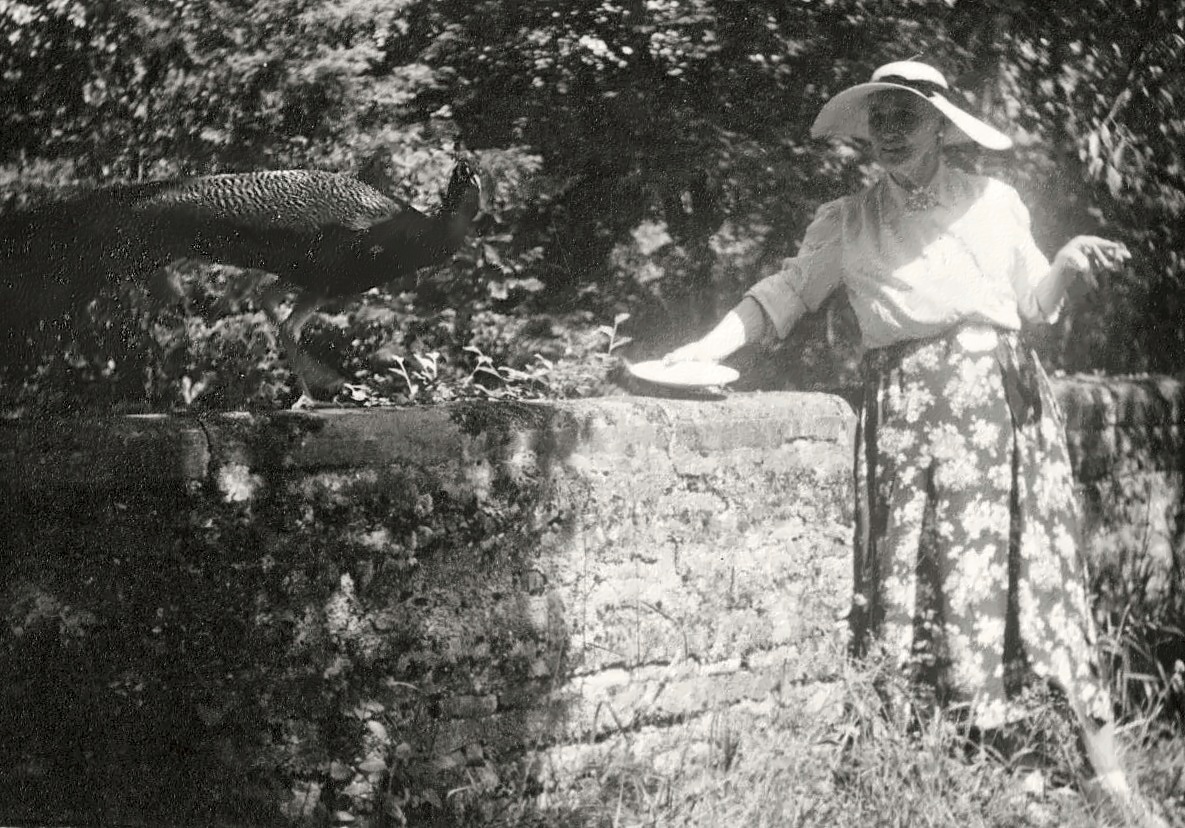

These photographs come from a scrapbook kept by Arnold’s niece Ruth Bennett: an early family group, “Grannie Bennett” as Ruth remembered her, and Marguerite’s visit to the Potteries in September 1954, when George Cedric went with her.


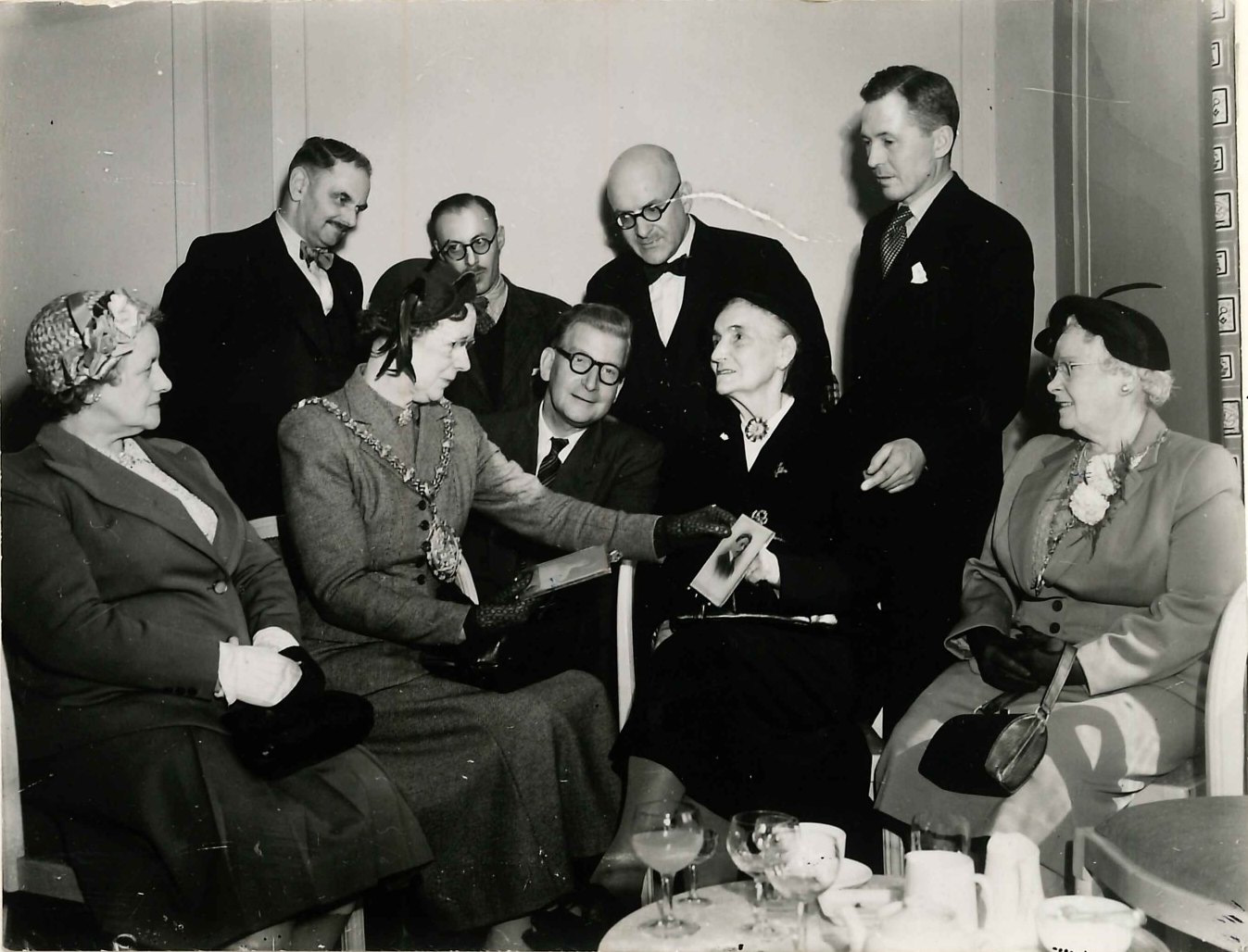


Courtesy of University of Staffordshire
Marguerite kept in touch with her Soulié relations in Nègrepelisse, and one branch of them became good friends of the Beardmores. Marguerite’s father, Jean Soulié, a baker in the town, was very probably the Jean Soulié born there on 6 July 1850 to Jean Soulié, a merchant, and Marie Villeneuve. Their younger son, Jean Émile Soulié, a carpenter, was born on 11 May 1854 and married Anne Belloc in 1879. Jean Émile’s daughter Anna Élise, Marguerite’s first cousin, was born on 24 April 1885 and married Jules Henri Lombrail, a Nègrepelisse merchant.
Anna Élise and Jules Henri’s son, Étienne Henri Émilien Lombrail, was born in Nègrepelisse on 2 July 1908. On 21 July 1942 he married Yvonne Marguerite Marcelle Gouze in Bordeaux, where they made their home and brought up their two sons, Gilbert and Bernard. Yvonne died at Soulac-sur-Mer in 2009; Étienne had died in Nègrepelisse in 2001.
George Cedric’s younger daughter, Tiffa, was good friends with Gilbert and Bernard in her early teens. They were together at the Château de Lolière when Tiffa visited “Tante Marguerite”, the brothers came to stay with the Beardmores in England, and Tiffa stayed with the family at their home in Bordeaux and went on holiday with them to Soulac-sur-Mer.
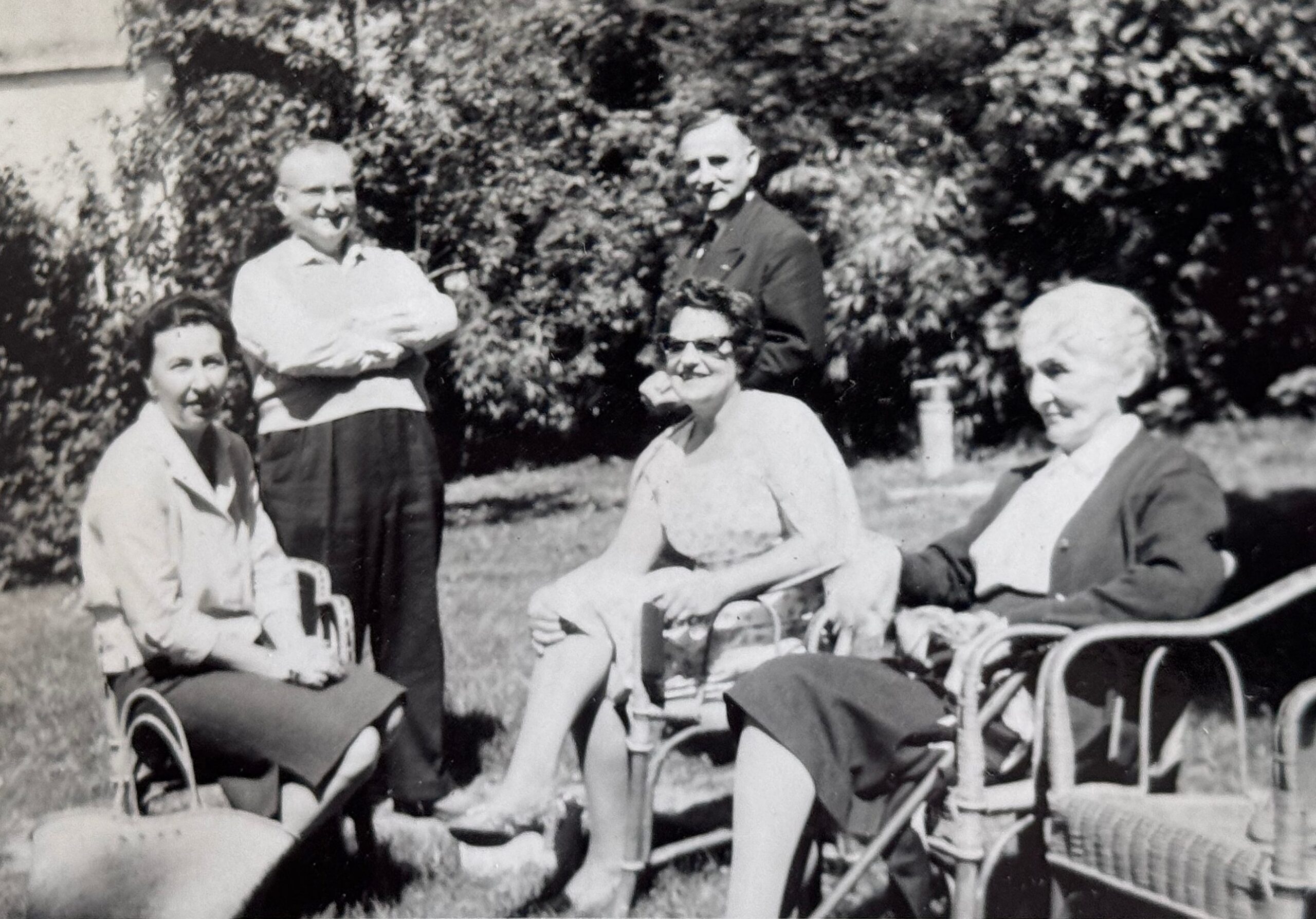
The Soulié and Lombrail details come from the Nègrepelisse registers of births and marriages in the Archives départementales de Tarn-et-Garonne. The link between Marguerite’s father and Jean Émile Soulié rests on his age and parentage; the marriage of Jean Soulié and Juliette Giraudon, which would name his parents, has not yet been found.
Arnold’s younger sister Eliza Tertia Bennett, always known as Tertia, was born in Burslem on 17 October 1872. On 4 March 1903 she married William Wood Kennerley at Christ Church with St Paul, Forest Hill. William, born in Burslem on 6 November 1870, the son of William Nelson Kennerley, was a friend of Arnold’s from the Potteries. He made his career as a civil servant, and by 1921 was a Deputy Assistant Director of the Disposal and Liquidation Commission.
The Kennerleys lived at 37 Clarendon Road, Putney (later renamed Clarendon Drive), where their two daughters were born: Mary on 3 June 1907 and Margaret on 4 July 1911. In 1921 their niece Margaret Beardmore was living with them there. By 1929 the family also had a home on the Sussex coast, first to Pagham and then to Bognor Regis, where their house, Imbros in Aldwick Avenue, became the family home. Marguerite stayed with them there on her visit to England in 1954, and wrote to Ruth Bennett from the house.


When war came in 1939 both sisters joined the Women’s Land Army. Mary, then 31 and working as a dressmaker, enrolled on 25 September 1939 as W.L.A. 2953 for local service in West Sussex, with no previous experience of the land. She served for eleven years, until the Land Army was disbanded on 30 November 1950, and her record card notes that she was staying on the land afterwards. Her certificate, a personal message of thanks signed by Queen Elizabeth, the Land Army’s patron, is among the papers we have. Margaret, a schoolmistress, enrolled as W.L.A. 6969 while combining domestic work with part-time teaching at Shute House School near Axminster in Devon. She was transferred to the Devon list in July 1939 and released on medical grounds in February 1945.

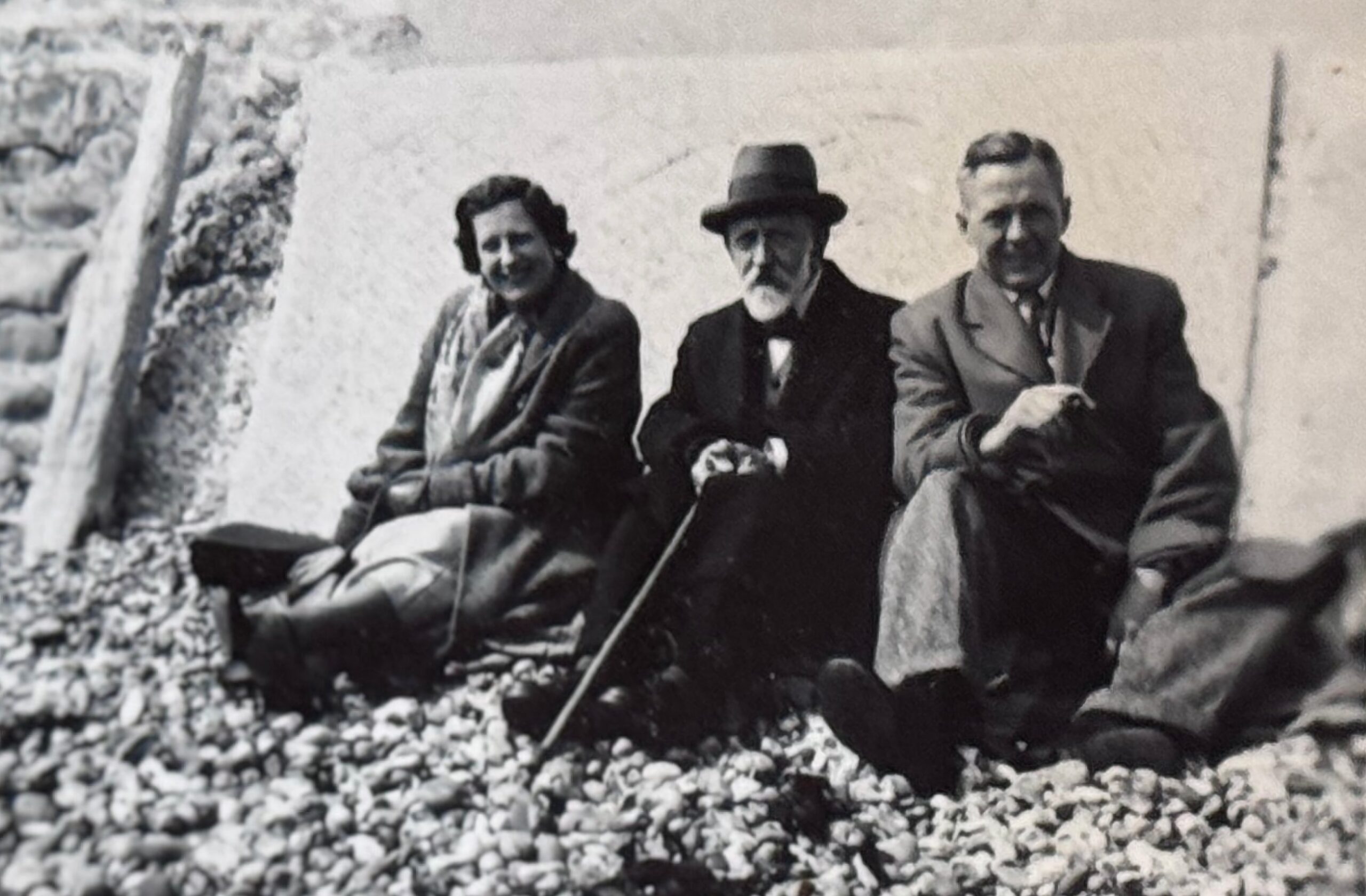
Tertia died on 27 December 1949, and William on 7 February 1965, aged 94. Neither of their daughters married. Margaret died in Bognor Regis on 4 April 1974. Mary lived at Imbros for the rest of her life, and died there on 3 November 1985, aged 78.
Tiffa’s family were close to Mary and Margaret in their Aldwick Avenue years, and we have some of Mary’s papers and photographs. More of their story will follow here.
George’s letter to Rick, 4 November 1952
George wrote this letter to his nephew Richard (Rick), Alan’s son, soon after Rick began three years’ regular service with the Royal Armoured Corps at Hadrian’s Camp, Carlisle. It is typed on George and Jean’s notepaper; the year, the signature and the postscript are in ink. The typist’s crossed-out letters are left out.
45, Pinner Park Avenue, Headstone Lane, Harrow, Middlesex.
Hatch End 1763.
November 4th. 1952
Dear Trooper,
Your mother has only just let us know your address or we should have written before. It’s quite an event having a soldier in the family again. You may not know it, but you had a great-uncle killed in 1917 (blown up by a mine in a suicidal counter-attack ordered by staff officers who were some miles behind the line) and your father skipped out the army to join the R.F.C. I missed it myself, and I’m sorry. It’s thrilling to learn that you’re in for 3 yrs. regular service. I have never heard of a C.O. called Hadrian. Is he a general?
We are all pretty well, and working hard without getting anywhere, like a swimmer in mid-Atlantic. My Dan Dare story about the Red Moon was so successful that they’re publishing it in Australia. But I’m not occupied with Dan at all these days. The Editor accepted one story called “Winds of Space” but the artist (a very fine fellow called Hampson who has a small boy who wears a space-suit and refers to doors as “air-locks”) decided that he was fed-up with the present universe, as known, and the next story will therefore show Dan skedaddling into Outer Space. I don’t know what the story’s called, but it’ll be good. The present Mercury story is a wash-out, and not by me or Hampson. I am much occupied with writing the two cartoon-serials in GIRL – “Robbie” and “Starling”. Robbie is so popular that I have had to think-up another story about her, dealing with a drowned valley, but Starling is to be replaced by a soppy item dealing with a girls’ ballet-school. The artist is John Worsley, who does the PC.49 drawings in EAGLE. I have never attended a girls’ ballet school so had to begin from scratch – very funny to go there and see these shapely little poppets bouncing up and down. Also young men who might be doing 3 yrs. r.s. whirling round and round on the points of their toes. I’ve just had a novel accepted (title not yet decided upon) all about a 5-years-old crime in a small French village. [underlined in ink, with a tick]
That’s all about me. Your Auntie Jean is plumper, Victoria is a grown-up young lady, and Anthea is quite a character. She always runs, never walks, with the result that she turns corners at 45 degrees, head down. A biography is to come out this month about your great-uncle (the famous one) but as a biography it is plain bad. I have read the proofs and don’t remember so incompetent a bit of writing.
Someday you will be posted nearer London and when that happens we want you to make use of us. We shan’t mind if you turn up at midnight or anytime and want a bed. But I shall feel really hurt (I mean this) if you don’t come and see us all you can. That is what uncles are for. Don’t forget. Here is a scrap of paper to remind you – keep it and you will never be penniless. Better still, send it back – I’ve had to borrow it from A. Jean.
Jolly good luck, Rick,
from
Uncle C
Keep us posted with your addresses
Envelope: 22814109 Tpr. Beardmore J.R., 32nd. Intake A Squadron, 67th. Training Regt. R.A.C., Hadrians Camp, Carlisle, Cumberland. Postmarked Harrow, Middx., 9.15 am, 5 November 1952.
Notes: the famous great-uncle is Arnold Bennett, and the biography was almost certainly Reginald Pound’s Arnold Bennett: A Biography, published that year. The novel about a crime in a French village was probably A Thousand Witnesses (1953). The great-uncle killed “in 1917” was probably Sydney Marsden, husband of Alan’s aunt May Beardmore, who was killed with the North Staffordshire Regiment near Loos in October 1915; no one else in the family is known to have died in the war. George’s Dan Dare story was “The Red Moon Mystery”, drawn by Frank Hampson. The “soppy item” about a ballet school became Belle of the Ballet.