Alan
Francis Alan Beardmore was born in Stoke, Staffordshire on April 25th 1899. Alan’s father, Francis William Beardmore (Frank), was a well-known manufacturer of earthenware and his mother, Frances Gertrude Bennett, was Arnold Bennett‘s sister.
The 1901 census shows Francis Alan, known as Alan, staying with his grandparents, John and Emily, at 188 Waterloo Road. At the time Alan’s parents were at Hatfield House with their yet-to-be-christened three week old daughter, Margaret.
By 1911 Alan was living with his parents, sister Margaret and brothers Roger and George, at 11 The Villas, Stoke on Trent.
In September 1915 Alan joined the Potteries Electric Traction Company in Stoke, first as an apprentice and later as a junior assistant engineer in one of its power stations. He left at the end of April 1917, the month he turned eighteen, in the middle of the First World War, and joined the army; his RAF record notes his earlier service with the King’s Own Yorkshire Light Infantry, number 87162.
Like many young recruits, Alan did his basic training in the Training Reserve, where he rose to lance-corporal. Thanks are due to Mark Cadle, who came across this Aldershot Command Athletic Association medal, engraved on the back to L/Cpl. F. A. Beardmore of the 23rd Training (Reserve) Brigade, for second place in a cross-country team race on March 6th 1918. Five days later, on March 11th 1918, Alan was posted to No. 5 Officer Cadet Wing to train as a pilot.
On March 28th 1918 a medical board passed him “fit as pilot, not above 10,000 ft”. Four days later the Royal Flying Corps and the Royal Naval Air Service merged to become the Royal Air Force, and Alan continued as one of its flight cadets: at No. 5 School of Aeronautics from May 11th, then at Spittlegate, near Grantham, with No. 50 Training Squadron from June 28th, and from August with No. 24 Training Depot Station.
In August 1918 he was awarded Royal Aero Club aviator’s certificate No. 6932, which made him a member of the Royal Aero Club of the United Kingdom. The Club’s index card is dated August 5th 1918 and gives his address as 11 The Villas, Stoke-on-Trent.
His RAF service record shows that he was commissioned as a temporary second lieutenant on November 11th 1918, Armistice Day itself, and the London Gazette lists him among the flight cadets commissioned that day. A posting to a finishing flight was cancelled, and on November 22nd he moved to No. 2 Fighting School. With the war over, he did not stay long: the London Gazette of July 11th 1919 records that 2nd Lt. F. A. Beardmore ‘relinquished his commission on ceasing to be employed’, in other words he was ‘demobbed’, with effect from June 2nd 1919. His officer’s service record is held at The National Archives (AIR 76/30/19).
After the war Alan went to Loughborough College, where the 1921 census finds him as a student, and, among other things, he established himself as a daring motor-cyclist. After the Beacon Hill Climb in May 1921 a reviewer wrote: “Beardmore is another motorist who is cut out for the sport. I like his quiet, unassuming way of ‘going for the bacon’; he is no half-hearted rider and when on the course he goes all out to win.”
On September 2nd 1922, aged 23, Alan embarked on a great adventure. He and eleven companions set out from Buckie on the Moray Firth in a drifter called ‘The Wild Goose‘ with the intention of establishing a British colony on one of the Galapagos Islands in the Pacific. They passed through the Caledonian Canal, calling at Milford Haven before crossing the Irish Sea and a stormy Bay of Biscay to Corunna and finally Lisbon. There things began to unravel and eventually the expedition was abandoned and ‘The Wild Goose’ sold.
Alan did not come straight home. The passenger lists show him landing at Southampton on February 24th 1923 from Buenos Aires, aboard the Royal Mail Steam Packet Company’s liner Arlanza, so it seems he went on to South America after all.
Alan married Freda Jessie Riley (1904–1979) on April 7th 1928 in Loughborough, Leicestershire. Alan’s best man was his brother Roger. Alan and Freda’s daughter Ann was born in Leeds on March 18th 1932 and their son John Richard in 1934. The family moved to Linton in 1934.

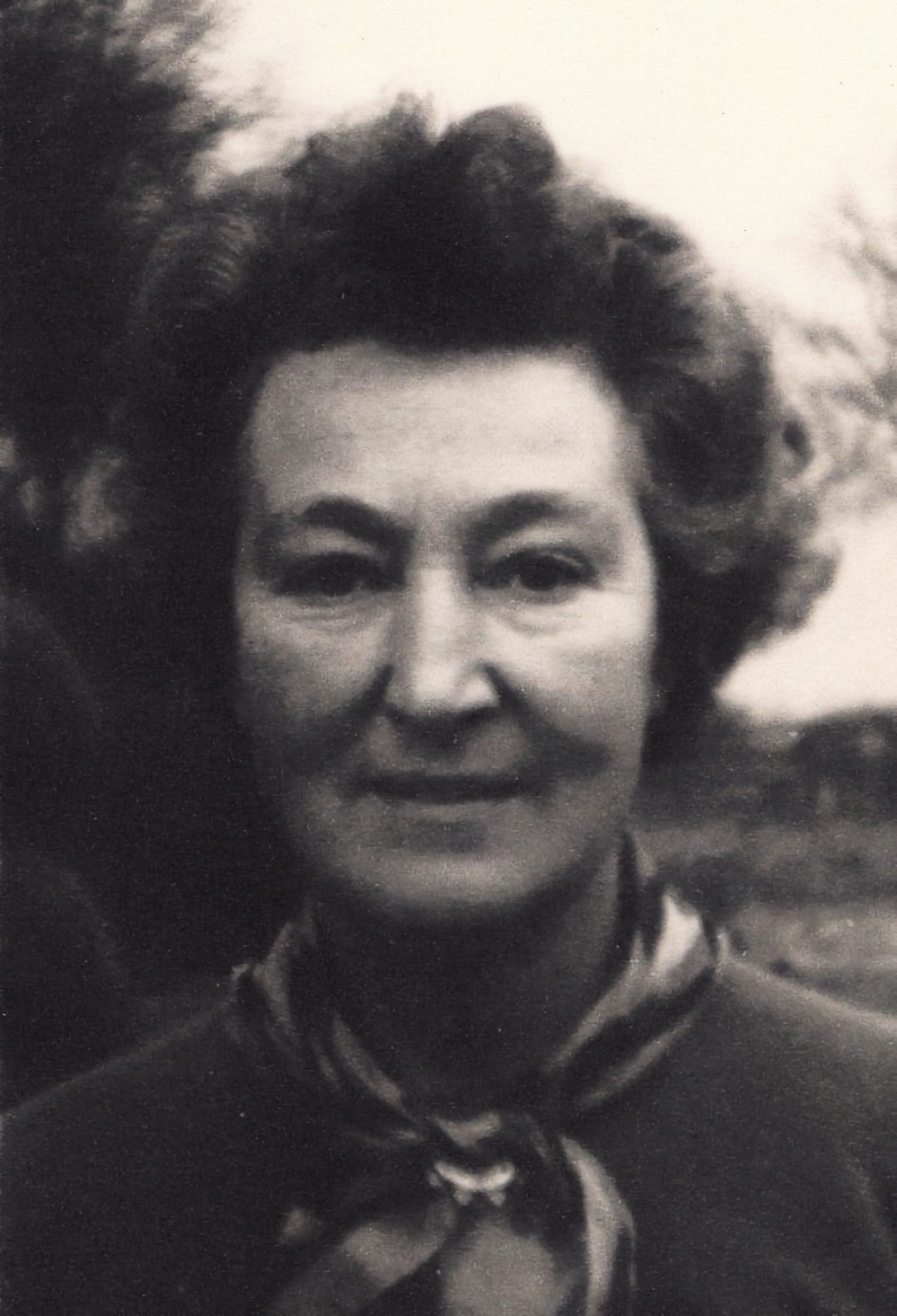
By the time of his marriage Alan was a commercial traveller for the Michelin Tyre Company, and he stayed with the firm. The 1939 Register, taken just after the outbreak of the Second World War, finds the family at Redways, Tripp Lane, Linton, with Alan described as a “Salesman, Giant & Car Tyres for Michelin”; giant tyres were the big tyres made for lorries and buses. Freda was at home and John at school, and the household also included a ten-year-old evacuee, Audrey Mary Robinson.
In 1952 Alan’s son Richard, known in the family as Rick, signed on for three years’ regular service in the army and went to the Royal Armoured Corps’ 67th Training Regiment at Hadrian’s Camp, Carlisle. His uncle George wrote to welcome “a soldier in the family again”, reminding him that his father had “skipped out the army to join the R.F.C.” Read George’s letter.
Alan died on February 5th 1977; his death was registered in the Claro district of North Yorkshire. Freda died two years later, on March 1st 1979.


George’s letter to Rick, 4 November 1952
George wrote this letter to his nephew Richard (Rick), Alan’s son, soon after Rick began three years’ regular service with the Royal Armoured Corps at Hadrian’s Camp, Carlisle. It is typed on George and Jean’s notepaper; the year, the signature and the postscript are in ink. The typist’s crossed-out letters are left out.
45, Pinner Park Avenue, Headstone Lane, Harrow, Middlesex.
Hatch End 1763.
November 4th. 1952
Dear Trooper,
Your mother has only just let us know your address or we should have written before. It’s quite an event having a soldier in the family again. You may not know it, but you had a great-uncle killed in 1917 (blown up by a mine in a suicidal counter-attack ordered by staff officers who were some miles behind the line) and your father skipped out the army to join the R.F.C. I missed it myself, and I’m sorry. It’s thrilling to learn that you’re in for 3 yrs. regular service. I have never heard of a C.O. called Hadrian. Is he a general?
We are all pretty well, and working hard without getting anywhere, like a swimmer in mid-Atlantic. My Dan Dare story about the Red Moon was so successful that they’re publishing it in Australia. But I’m not occupied with Dan at all these days. The Editor accepted one story called “Winds of Space” but the artist (a very fine fellow called Hampson who has a small boy who wears a space-suit and refers to doors as “air-locks”) decided that he was fed-up with the present universe, as known, and the next story will therefore show Dan skedaddling into Outer Space. I don’t know what the story’s called, but it’ll be good. The present Mercury story is a wash-out, and not by me or Hampson. I am much occupied with writing the two cartoon-serials in GIRL – “Robbie” and “Starling”. Robbie is so popular that I have had to think-up another story about her, dealing with a drowned valley, but Starling is to be replaced by a soppy item dealing with a girls’ ballet-school. The artist is John Worsley, who does the PC.49 drawings in EAGLE. I have never attended a girls’ ballet school so had to begin from scratch – very funny to go there and see these shapely little poppets bouncing up and down. Also young men who might be doing 3 yrs. r.s. whirling round and round on the points of their toes. I’ve just had a novel accepted (title not yet decided upon) all about a 5-years-old crime in a small French village. [underlined in ink, with a tick]
That’s all about me. Your Auntie Jean is plumper, Victoria is a grown-up young lady, and Anthea is quite a character. She always runs, never walks, with the result that she turns corners at 45 degrees, head down. A biography is to come out this month about your great-uncle (the famous one) but as a biography it is plain bad. I have read the proofs and don’t remember so incompetent a bit of writing.
Someday you will be posted nearer London and when that happens we want you to make use of us. We shan’t mind if you turn up at midnight or anytime and want a bed. But I shall feel really hurt (I mean this) if you don’t come and see us all you can. That is what uncles are for. Don’t forget. Here is a scrap of paper to remind you – keep it and you will never be penniless. Better still, send it back – I’ve had to borrow it from A. Jean.
Jolly good luck, Rick,
from
Uncle C
Keep us posted with your addresses
Envelope: 22814109 Tpr. Beardmore J.R., 32nd. Intake A Squadron, 67th. Training Regt. R.A.C., Hadrians Camp, Carlisle, Cumberland. Postmarked Harrow, Middx., 9.15 am, 5 November 1952.
Notes: the famous great-uncle is Arnold Bennett, and the biography was almost certainly Reginald Pound’s Arnold Bennett: A Biography, published that year. The novel about a crime in a French village was probably A Thousand Witnesses (1953). The great-uncle killed “in 1917” was probably Sydney Marsden, husband of Alan’s aunt May Beardmore, who was killed with the North Staffordshire Regiment near Loos in October 1915; no one else in the family is known to have died in the war. George’s Dan Dare story was “The Red Moon Mystery”, drawn by Frank Hampson. The “soppy item” about a ballet school became Belle of the Ballet.